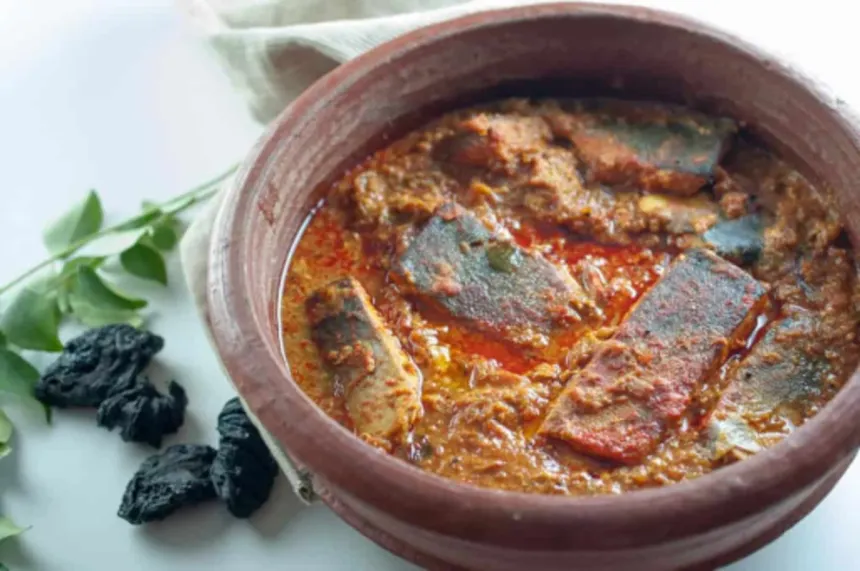
Malabar Fish Curry is a renowned coastal delicacy from the Malabar region of Kerala, celebrated for its bold pairing of tender, fresh fish with a tart, spiced coconut and tamarind gravy. Traditionally cooked in an unglazed earthenware pot known as a meen chatti, this curry balances sharp acidity, rich coconut milk, and the earthy, smoky notes of Malabar tamarind (kudampuli).
Unlike heavy, cream-laden North Indian fish curries, this South Indian staple relies on light, vibrant aromatics: fresh ginger, garlic, shallots, curry leaves, and green chilies sizzled in virgin coconut oil. The dried tamarind pieces soften during the simmer, infusing the broth with a deep, smoky tang that cuts through the natural oiliness of firm sea fish like kingfish or pomfret.
This homestyle coastal curry comes together in about thirty minutes. As with most traditional fish preparations, the curry deepens in flavor as it sits, making it a reliable, authentic centerpiece for lunch or dinner when paired with piping hot rice.
Recipe Information
- Prep Time: 15 minutes
- Soaking Time: 15 minutes (for Kudampuli)
- Cook Time: 20 minutes
- Total Time: 35 minutes
- Servings: 4
- Cuisine: South Indian / Kerala
- Course: Main Course
- Difficulty: Easy
Ingredients
For Soaking the Tamarind
- 3 small pieces Kudampuli (Malabar tamarind/brindleberry)
- 1/2 cup warm water
For the Fish and Marinade
- 500g firm fish steaks (Kingfish/Surmai, Seer fish, or Pomfret), cleaned and patted dry
- 1/2 teaspoon turmeric powder
- 1/2 teaspoon salt
For the Curry Gravy
- 2 tablespoons coconut oil (divided)
- 1/2 teaspoon mustard seeds (kaduku)
- 1/4 teaspoon fenugreek seeds (uluva/methi)
- 1 cup shallots (small sambar onions, thinly sliced)
- 1 tablespoon ginger (finely julienned)
- 1 tablespoon garlic (thinly sliced)
- 3 fresh green chilies (slit lengthwise)
- 2 sprigs fresh curry leaves
- 1.5 tablespoons Kashmiri red chili powder
- 1 tablespoon coriander powder
- 1/4 teaspoon turmeric powder
- 1 cup thin coconut milk (second extract)
- 1/2 cup thick coconut milk (first extract)
- 1 teaspoon salt (adjust to taste)
How to Make Malabar Fish Curry
Step 1: Soak the kudampuli and season the fish Rinse the Kudampuli pieces under running water to remove any surface debris. Place them in a small bowl with 1/2 cup of warm water and let them soak for 15 minutes to soften. In another plate, rub the fish steaks with 1/2 teaspoon of turmeric powder and 1/2 teaspoon of salt. Set both aside.
Step 2: Temper the aromatics in coconut oil Heat 1.5 tablespoons of coconut oil in a clay pot (meen chatti) or a heavy-bottomed, wide pan over medium heat. Add the mustard seeds and let them crackle. Add the fenugreek seeds and stir quickly for 15 seconds until they turn lightly golden; do not let them turn dark brown or burn, as they will turn bitter. Add the sliced shallots, julienned ginger, sliced garlic, slit green chilies, and one sprig of fresh curry leaves. Sauté for 5 to 6 minutes until the shallots soften and turn translucent.
Step 3: Bloom the ground spices Reduce the heat to low. Add the Kashmiri red chili powder, coriander powder, and 1/4 teaspoon of turmeric powder. Stir continuously for 1 to 2 minutes so the spices gently roast in the oil without scorching, releasing a deep red color and fragrant aroma.
Step 4: Build the simmering broth Pour in the thin coconut milk along with the soaked Kudampuli and its soaking water. Add 1 teaspoon of salt. Stir well, raise the heat to medium, and bring the liquid to a rolling boil. Allow the broth to simmer uncovered for 4 to 5 minutes so the tamarind infuses its tart, smoky flavor into the sauce.
Step 5: Simmer the fish steaks Gently lower the seasoned fish steaks into the boiling curry in a single layer. Do not stir with a spoon, as this can break delicate fish pieces; instead, hold the sides of the clay pot or pan with kitchen towels and gently swirl it in circular motions to submerge the fish in the gravy. Turn the heat down to medium-low, cover with a lid, and simmer gently for 8 to 10 minutes until the fish turns opaque and tender.
Step 6: Finish with thick coconut milk and tempering Remove the lid and turn the flame to low. Pour the thick coconut milk in a circular drizzle around the curry. Swirl the pan gently again to blend the coconut milk without disturbing the fish. Let it warm through on very low heat for 1 to 2 minutes; do not let the curry boil vigorously once the thick coconut milk is added, as it may split. Turn off the flame. Scatter the remaining sprig of fresh curry leaves on top and drizzle the remaining 1/2 tablespoon of raw coconut oil over the surface. Cover with the lid and let the curry rest for at least 15 minutes before serving.
How to Serve
- Steamed Kerala Matta red rice or hot basmati rice
- Warm, flaky Kerala Malabar Parottas
- Steamed Appam or soft Idiyappam (string hoppers)
- Crisp fried raw plantain chips (upperi) or cabbage thoran
- A side of quick-pickled green mango
Recipe Tips
- Kudampuli is the soul of the curry: Malabar tamarind (brindleberry) is naturally smoky, sun-dried, and dark black. It provides an earthy tartness distinct from regular brown tamarind paste. If you must substitute, use Kokum rinds soaked in water, though Kudampuli delivers the truest coastal profile.
- Swirl, never stir: Fish steaks become tender very quickly in simmering liquids. Always swirl the pot gently with your hands rather than digging through with a metal ladle to avoid breaking the flesh.
- Do not boil thick coconut milk: Vigorous boiling breaks the fat emulsion in thick coconut milk, leading to an oily, curdled appearance. Add it at the very end on low heat, then remove from the stove.
- Use cold-pressed virgin coconut oil: Coconut oil provides the distinct sweet aroma characteristic of authentic Kerala cuisine. Substituting neutral cooking oils diminishes the coastal flavor profile.
- Tastes better with rest: Like many coastal fish curries, this dish reaches its peak flavor a few hours after cooking, or even the next day, as the fish absorbs the tartness of the Kudampuli and the spices mellow. Store in an airtight glass container in the refrigerator for up to 2 days.
Frequently Asked Questions
Can I make this curry without coconut milk? Yes. A popular variation from the same region, Malabar Meen Mulakittathu, uses no coconut milk at all. Simply replace both measures of coconut milk with plain water for a vibrant red, fiery, and tangier broth.
What types of fish work best for this recipe? Firm, meaty fish with good natural oil content hold up best. Seer fish (king mackerel/surmai), black or white pomfret, swordfish, sea bass, and Indian mackerel (ayala) are all traditional, excellent choices.
Can I remove the Kudampuli pieces after cooking? Yes. You can leave the pieces in the gravy while it rests so the sourness continues to develop. If the curry reaches your desired tartness, simply fish out the pieces with a clean spoon before storing so it does not become overly sour.
Final Thoughts
Malabar Fish Curry captures the vibrant, sun-drenched spirit of Kerala’s coastal kitchens. The interplay of smoky Kudampuli, velvety coconut milk, and fresh curry leaves brings incredible life to fresh fish steaks without heavy work. Prepare a batch alongside a pot of hot rice, let it rest for the flavors to marry, and enjoy an authentic coastal feast right from your own kitchen.