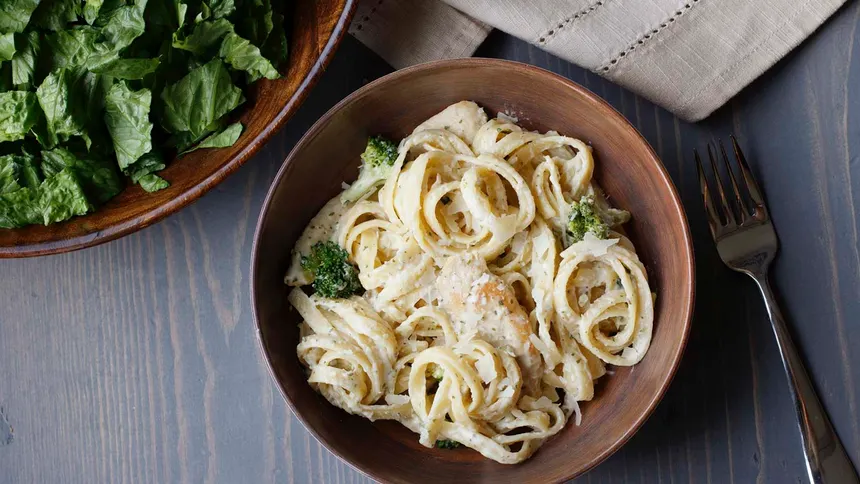
Fettuccine Alfredo is a rich, comforting pasta dish that coats wide noodles in a velvety, cheese-based sauce. While the original Roman recipe relies simply on butter and Parmigiano-Reggiano cheese emulsified with pasta water, this popular modern version incorporates heavy cream and garlic to guarantee a luxurious, foolproof texture every time.
Making this dish from scratch takes less time than ordering takeout and requires only a handful of ingredients. By grating your own cheese and carefully managing the heat, you can easily avoid the thick, gluey texture often found in store-bought jars. The result is a smooth, savory sauce that perfectly clings to every strand of pasta.
Whether you need a quick and satisfying weeknight dinner or an elegant meal to serve guests, this creamy garlic parmesan pasta delivers restaurant-quality results with minimal effort.
Recipe Information
- Prep Time: 10 minutes
- Cook Time: 15 minutes
- Total Time: 25 minutes
- Servings: 4
- Cuisine: Italian-American
- Course: Main Course
- Difficulty: Easy
Ingredients
For the Pasta
- 400g dried fettuccine pasta
- 1 tablespoon salt (for boiling water)
For the Alfredo Sauce
- 1/2 cup (115g) unsalted butter
- 3 cloves garlic (finely minced)
- 1.5 cups heavy cream (at room temperature)
- 1.5 cups Parmigiano-Reggiano cheese (freshly and finely grated)
- 1/4 teaspoon freshly cracked black pepper
- 1/4 teaspoon salt (adjust to taste)
- 1/4 cup reserved pasta water
For the Garnish
- 2 tablespoons fresh parsley (finely chopped)
- Extra freshly grated Parmigiano-Reggiano
How to Make Creamy Garlic Parmesan Fettuccine
Step 1: Cook the pasta Bring a large pot of water to a rolling boil. Add the salt, then drop in the dried fettuccine. Stir occasionally to prevent the noodles from sticking together. Boil according to the package instructions until the pasta is al dente, meaning it is cooked through but still has a slight firmness when bitten. Before draining the pasta, carefully scoop out about half a cup of the starchy pasta water and set it aside. Drain the pasta well.
Step 2: Sauté the garlic in butter While the pasta is boiling, place a large, deep skillet over medium-low heat. Add the unsalted butter and let it melt completely. Add the finely minced garlic to the melted butter. Cook gently for 1 to 2 minutes until the garlic is soft and highly fragrant. Do not let the garlic turn brown, as browned garlic will give the delicate cream sauce a bitter taste.
Step 3: Simmer the cream Pour the room-temperature heavy cream into the skillet with the butter and garlic. Whisk the mixture gently to combine. Allow the liquid to come to a very gentle simmer. Let it cook for 3 to 4 minutes, whisking occasionally, until the cream reduces slightly and becomes thick enough to coat the back of a spoon.
Step 4: Melt the cheese into the sauce Turn the heat down to the lowest possible setting. Sprinkle the freshly grated Parmigiano-Reggiano cheese into the skillet a little bit at a time, whisking continuously. Continue whisking until the cheese is completely melted and the sauce looks smooth and velvety. Stir in the cracked black pepper and salt.
Step 5: Combine the pasta and sauce Add the drained, hot fettuccine directly into the skillet with the Alfredo sauce. Use a pair of tongs to gently toss the noodles, ensuring every strand is heavily coated. If the sauce seems too thick, pour in a small splash of the reserved pasta water and toss again until you reach your desired consistency.
Step 6: Garnish and serve Remove the skillet from the heat immediately. Garnish the pasta with freshly chopped parsley and an extra dusting of grated cheese. Serve right away, as cream sauces thicken rapidly as they cool.
How to Serve
- Grilled or pan-seared chicken breast strips
- Garlic butter breadsticks
- Roasted asparagus with lemon
- Sautéed garlic shrimp
- A crisp Caesar salad
- Steamed broccoli florets
Recipe Tips
- Grate your own cheese: This is the most important rule for Alfredo sauce. Pre-shredded cheese in bags is coated in anti-caking agents like potato starch or cellulose, which will prevent the cheese from melting smoothly and result in a grainy, clumpy sauce.
- Manage your heat carefully: Dairy separates and curdles when exposed to high, aggressive heat. Always keep your stove on medium-low or low when making the sauce, and never let the cream come to a rapid, rolling boil.
- Use room temperature cream: Pouring cold cream directly from the refrigerator into hot butter can shock the mixture and cause the butterfat to separate. Measure out your cream before you start cooking so it loses its chill.
- Do not rinse the pasta: Rinsing boiled pasta washes away the natural starches on the surface of the noodles. You need that starch to help the heavy cream sauce grip the pasta.
- Serve on warm plates: Because butter and cheese solidify quickly as they drop in temperature, serving your fettuccine on warmed plates helps keep the sauce silky and fluid throughout the meal.
Frequently Asked Questions
Can I use milk or half-and-half instead of heavy cream? You can use half-and-half, but the sauce will be noticeably thinner and less rich. If you use regular milk, the sauce will not thicken properly and is highly prone to curdling when mixed with the cheese and heat. For the authentic texture, heavy cream is strongly recommended.
How do I reheat leftover Alfredo sauce without it separating? Cream sauces are notoriously tricky to reheat. The best method is to place the cold pasta in a saucepan over very low heat. Add a splash of fresh milk or cream and stir gently and continuously until it is warmed through. Do not use the microwave, as the intense heat will cause the butter to separate from the cheese, leaving you with an oily pool.
Can I add protein to this dish? Absolutely. Sliced grilled chicken breast, sautéed shrimp, or even crispy bacon bits can be folded into the pasta during the final step right before serving.
Final Thoughts
Homemade Fettuccine Alfredo is a testament to how a few simple, high-quality ingredients can create an unforgettable meal. By taking the time to grate fresh cheese and carefully managing your stovetop heat, you are rewarded with a rich, flawless pasta dish. It is a comforting classic that belongs in every home cook’s regular rotation.