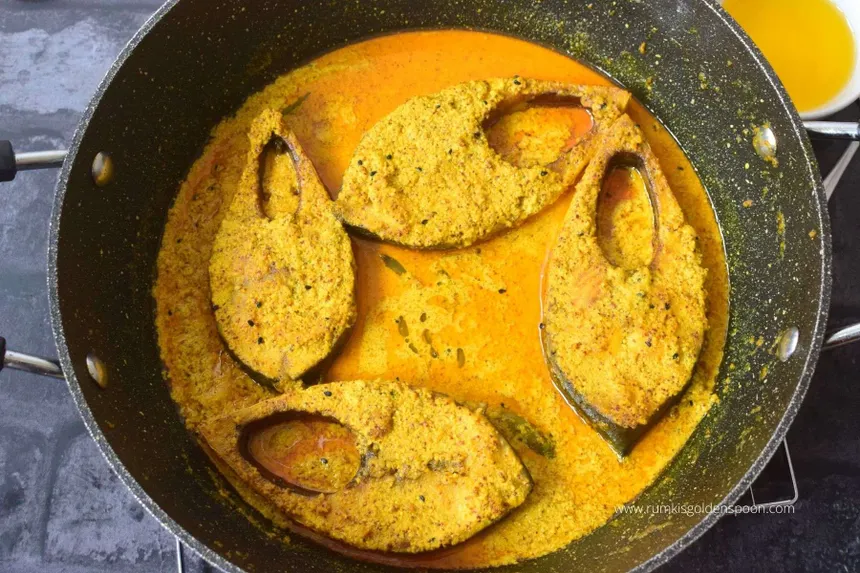
Shorshe Ilish is the crowning jewel of Bengali culinary tradition, revered across Bengal for its pairing of rich, oily Hilsa fish with a sharp, pungent mustard seed paste. Known for its distinct aroma and tender flakiness, Hilsa naturally complements the fiery bite of green chilies and cold-pressed mustard oil.
Unlike many heavy Indian gravies, this preparation relies on minimal spices to allow the prized taste of the fish to dominate. The mustard gravy (shorshe bata) is lightly simmered rather than intensely fried, ensuring the delicate fats of the fish melt into the sauce without turning dry. Slit green chilies impart freshness and warmth without overpowering the signature mustard bite.
This authentic home-style recipe comes together in under half an hour. Traditionally served with steaming white rice, it offers an unmistakable taste of coastal Bengal comfort that requires no complex techniques to master.
Recipe Information
- Prep Time: 15 minutes
- Soaking Time: 15 minutes (for mustard seeds)
- Cook Time: 15 minutes
- Total Time: 45 minutes
- Servings: 4
- Cuisine: Bengali / Indian
- Course: Main Course
- Difficulty: Easy
Ingredients
For the Mustard Paste
- 2 tablespoons yellow mustard seeds (shorshe)
- 1 tablespoon black/brown mustard seeds (rai)
- 3 fresh green chilies
- 1/4 teaspoon salt
- 1/3 cup warm water (for grinding)
For the Fish and Gravy
- 4 steaks Hilsa fish (Ilish maach, roughly 100g to 125g each)
- 1/2 teaspoon turmeric powder (haldi), divided
- 1 teaspoon salt, divided
- 3 tablespoons virgin cold-pressed mustard oil (kachi ghani)
- 1/2 teaspoon nigella seeds (kalo jeere/kalonji)
- 4 to 5 fresh green chilies (slit lengthwise)
- 1/2 teaspoon Kashmiri red chili powder (optional, for color)
- 1 cup warm water
How to Make Bengali Shorshe Ilish
Step 1: Soak and grind the mustard paste In a small bowl, combine the yellow mustard seeds, black mustard seeds, and warm water. Let them soak for 15 minutes to soften the hulls. Transfer the soaked seeds along with their water into a small blender jar. Add 3 green chilies and 1/4 teaspoon of salt. Blend until you achieve an exceptionally smooth, uniform paste. To guarantee a silky gravy and remove bitter seed skins, strain the paste through a fine-mesh sieve with a splash of water, pressing the liquid through with a spoon. Discard the leftover seed husks.
Step 2: Season the fish steaks Gently pat the Hilsa steaks dry with a paper towel. Place them on a plate and coat them evenly with 1/4 teaspoon of turmeric powder and 1/2 teaspoon of salt. Let them sit for 5 to 10 minutes at room temperature.
Step 3: Temper the mustard oil Heat the cold-pressed mustard oil in a wide, shallow pan or kadai over medium heat until it begins to smoke lightly. Lower the heat to medium-low and let the oil cool down slightly so the spices do not scorch. Add the nigella seeds (kalo jeere) and 2 of the slit green chilies. Let them crackle and release their aroma for 20 seconds.
Step 4: Build the mustard broth Stir the remaining 1/4 teaspoon of turmeric powder, the strained mustard paste, and the optional Kashmiri red chili powder into the pan. Sauté gently on low heat for only 1 minute. Do not over-fry the mustard paste, as prolonged exposure to dry heat turns it distinctly bitter. Pour in 1 cup of warm water and the remaining 1/2 teaspoon of salt. Stir gently to create an even, pale-yellow broth and bring it to a simmer.
Step 5: Simmer the fish steaks Carefully lay the raw, seasoned Hilsa steaks into the simmering mustard gravy in a single layer. Scatter the remaining slit green chilies over the top. Turn the heat down to low, cover the pan with a tight-fitting lid, and allow the fish to simmer gently for 5 to 6 minutes.
Step 6: Flip and finish Remove the lid. Using a flat spatula, gently turn each fish steak over, taking care not to break the delicate meat. Cover the pan again and simmer for an additional 4 to 5 minutes until the fish is opaque, tender, and cooked through. Turn off the heat. Drizzle 1 teaspoon of raw cold-pressed mustard oil over the surface, replace the lid, and let it rest undisturbed for 5 minutes before serving.
How to Serve
- Steaming hot long-grain Gobindobhog or basmati rice
- A side of green chilies and a slice of Gondhoraj lebu (fragrant lime)
- Crisp fried potato matchsticks (aloo bhaja)
- Shukto (traditional Bengali vegetable medley) to start the meal
- A cup of hot green tea or fresh lime water
Recipe Tips
- Balance yellow and black mustard: Pure black mustard seeds can taste unpleasantly pungent and harsh, while pure yellow mustard lacks depth. A 2:1 ratio of yellow to black mustard yields the classic balance of flavor and gentle heat.
- Grind mustard with salt and green chilies: Grinding mustard seeds dry or without salt can cause an enzymatic reaction that releases intense bitterness. Adding salt and green chilies neutralizes this chemical reaction, keeping the paste aromatic and sweet.
- Do not fry the fish beforehand: While some regional variations lightly sear the fish, authentic Shorshe Ilish is cooked raw directly in the boiling sauce (bhaapa or jhol style). This allows the natural fats of the fish to enrich the gravy.
- Strain the paste: Passing the ground paste through a sieve removes rough seed shells. This step prevents digestive heaviness and ensures a luxurious, velvety texture.
- Finish with raw mustard oil: Drizzling raw oil right before covering traps the sharp, fresh aroma that defines authentic Bengali home cooking.
- Storing leftovers: Cooked fish can be kept in a covered glass container in the refrigerator for up to 2 days. Reheat gently in a covered pan over low heat with a spoonful of warm water so the sauce does not dry out.
Frequently Asked Questions
Can I use a different fish if Hilsa is unavailable? Yes. If you cannot source Hilsa (Ilish), thick steaks of Rohu (rui), Katla, sea bass, or salmon make good alternatives. Salmon shares a similar oily, rich profile that pairs well with the sharp mustard sauce.
Why did my mustard gravy turn bitter? Mustard paste turns bitter if ground without salt and chilies, if the blender blades heated the seeds excessively, or if the paste was fried for too long in the pan. Keep sautéing under one minute before adding water.
Is it necessary to use mustard oil? Mustard oil is the core flavor driver of this dish. Cooking with neutral oils like sunflower or canola will remove the signature aroma and pungent finish that makes the recipe authentic.
Final Thoughts
Bengali Shorshe Ilish is a testament to the power of thoughtful, minimalist cooking. By pairing the natural, buttery profile of fresh fish with a clean, sharp mustard and chili reduction, it creates an unforgettable dining experience. Plate it with piping hot rice for an authentic, traditional Bengali meal right from your own kitchen.