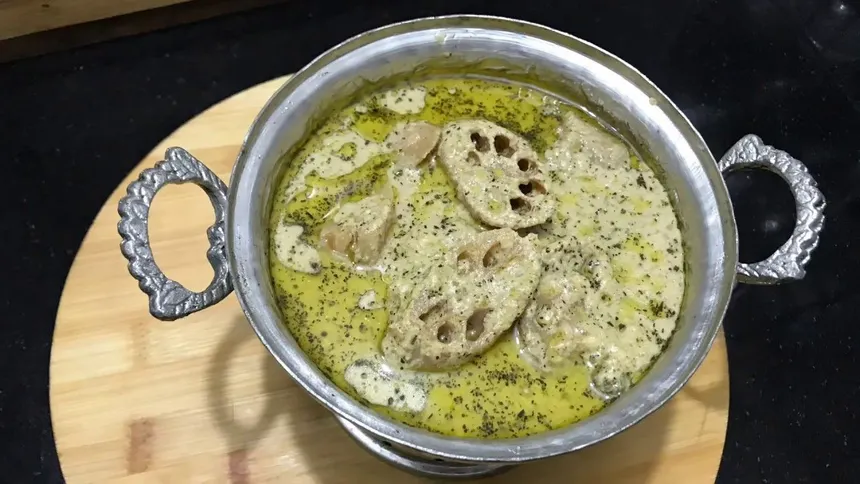
Nadru Yakhni is a signature dish of the Kashmir Valley, celebrated for its delicate, fragrant, and soothing yogurt-based broth paired with tender, fibrous lotus stem (nadru). Fresh lotus roots harvested from Dal Lake and Wular Lake form a fundamental pillar of traditional Kashmiri home cooking, starring prominently in ceremonial feasts and family dinners alike.
Unlike the fiery gravies of the plains, authentic Yakhni relies on subtle spicing: dry ginger powder (saunth), fennel seed powder (saunf), and whole sweet spices like green and black cardamoms simmered gently in ghee. The sauce is characterized by a pale, ivory-golden hue, omitting turmeric, onions, garlic, and tomatoes to allow the natural earthy flavor of the lotus stem and the tang of fresh curd to lead.
Mastering Yakhni comes down to tempering the yogurt properly so it remains velvety smooth without splitting. Ready in under forty minutes, this vegetarian classic delivers an elegant, deeply comforting meal that pairs naturally with steaming white rice.
Recipe Information
- Prep Time: 15 minutes
- Cook Time: 25 minutes
- Total Time: 40 minutes
- Servings: 4
- Cuisine: Kashmiri / North Indian
- Course: Main Course
- Difficulty: Medium
Ingredients
For Prepping the Lotus Stem
- 350g fresh lotus stem (nadru)
- 3 cups water (for boiling)
- 1/2 teaspoon salt
For the Yogurt Gravy Base
- 2.5 cups plain yogurt (dahi, fresh and full-fat)
- 1 large egg (or 1 tablespoon cornstarch/besan mixed with 2 tablespoons water to prevent curdling)
- 2 tablespoons pure desi ghee
- 1/4 teaspoon asafoetida (hing)
- 1 teaspoon cumin seeds (jeera)
- 2 black cardamoms (badi elaichi, lightly crushed)
- 4 green cardamoms (chhoti elaichi)
- 4 cloves (laung)
- 1-inch cinnamon stick
- 1 bay leaf (tej patta)
- 1.5 teaspoons fennel seed powder (saunf)
- 1 teaspoon dry ginger powder (saunth)
- 1/2 teaspoon dry mint leaves (pudina, crushed)
- 1 teaspoon salt (adjust to taste)
- 1 cup warm water (or reserved nadru cooking water)
How to Make Authentic Kashmiri Nadru Yakhni
Step 1: Clean and slice the lotus stem Wash the lotus stem thoroughly under running water to clear any mud from the outer skin. Use a vegetable peeler to scrape off the tough outer layer. Slice the nadru diagonally into 1/2-inch thick pieces. Rinse the sliced pieces in a bowl of clean water to ensure the internal hollow tubes are completely free of silt.
Step 2: Parboil the nadru Place the sliced lotus stem in a pot or pressure cooker with 3 cups of water and 1/2 teaspoon of salt. Pressure cook for 1 to 2 whistles, or boil uncovered in a pot for 12 to 15 minutes until a knife pierces the stem with slight resistance. It should be tender but retain a pleasant, crisp bite. Drain and reserve 1 cup of the cooking water.
Step 3: Whisk and stabilize the yogurt In a large mixing bowl, whisk the full-fat yogurt along with the egg (or cornstarch slurry) until completely smooth, silky, and free of lumps. Whisking in the egg white/yolk or a touch of starch stabilizes the dairy proteins, preventing the sauce from separating when heated.
Step 4: Cook the yogurt reduction Pour the whisked yogurt into a deep, heavy-bottomed pot over medium heat. Stir continuously in one single direction using a wooden spoon or whisk. Do not stop stirring until the yogurt comes to a rolling boil, which takes about 6 to 8 minutes. Once it bubbles steadily, lower the heat to low; it is now fully stabilized and will not curdle.
Step 5: Temper the whole spices in ghee In a separate small pan, heat the ghee over medium heat. Add the cumin seeds and asafoetida (hing), letting them sizzle for 15 seconds. Add the black cardamoms, green cardamoms, cloves, cinnamon stick, and bay leaf. Sauté gently for 30 seconds until the spices release a warm, sweet aroma.
Step 6: Combine spices, nadru, and broth Pour the sizzling ghee and whole spices directly into the bubbling yogurt base. Stir well to integrate the aromatic fat. Add the fennel seed powder (saunf), dry ginger powder (saunth), and salt. Add the boiled lotus stem slices and 1 cup of the warm reserved cooking water. Stir thoroughly to combine.
Step 7: Simmer and finish with dry mint Let the curry simmer uncovered on low heat for 10 to 12 minutes, allowing the lotus stems to absorb the flavors of the spiced yogurt. The gravy will thicken slightly and turn glossy. Crush the dried mint leaves between your palms and scatter them over the pot. Stir gently, turn off the flame, and let the dish rest with the lid on for 5 minutes before serving.
How to Serve
- Steaming hot Kashmiri short-grain or aged basmati rice
- Kashmiri Haakh (collard greens sautéed with mustard oil and whole chilies)
- Walnut-radish chutney (Doon Muj Chetin)
- Crisp fried potato wedges (Aloo Dum style)
- Fresh seasonal greens or crisp radish slices
Recipe Tips
- Rinse inside the cavities: Silt frequently hides inside the porous tubes of fresh lotus stem. Slicing on an angle reveals the holes clearly, making it easy to spot and flush out any sediment under cold water.
- Stir yogurt in one direction: When heating raw curd on the stove, stirring continuously in a uniform direction keeps the fat emulsion stable, ensuring a silky, restaurant-grade texture.
- Do not overcook the nadru: The charm of lotus stem lies in its distinctive crunch. Over-boiling will turn it mushy and waterlogged, losing its structural contrast against the creamy sauce.
- Use dried mint: Authentic Yakhni is always finished with crushed dried mint rather than fresh mint leaves. Dried mint releases a gentle, herbaceous aroma that balances the rich yogurt without turning the sauce dark.
- Storage guidance: Yakhni keeps well in an airtight container in the refrigerator for up to 2 days. Reheat gently on low heat while stirring, adding a splash of warm water if the gravy has set firm in the cold.
Frequently Asked Questions
Can I make this recipe without the egg? Yes. In Kashmiri Pandit households, an egg is not used. Instead, whisk 1 tablespoon of cornstarch, rice flour, or roasted besan into the cold curd before heating, or simply whisk full-fat dahi vigorously and stir without interruption until it boils.
Can I substitute other vegetables for lotus stem? Yes. You can use bottle gourd (lauki/al), small whole baby potatoes (dum aloo style), or paneer cubes fried until pale golden. Lotus stem, however, remains the traditional choice for its crisp texture.
Why did my yogurt gravy split? Yogurt splits if it is cold straight from the fridge, under-whisked, or if the heat is too aggressive without constant stirring. Always use room-temperature yogurt and keep your spoon moving until the mixture comes to a full boil.
Final Thoughts
Kashmiri Nadru Yakhni showcases the quiet elegance of traditional Himalayan cooking, where gentle spices and technique take precedence over heavy chili heat. The marriage of crunchy lotus root, aromatic fennel, and velvety yogurt delivers an intensely comforting dining experience. Prepare this timeless recipe for a wholesome, authentic taste of the valley right at your own table.