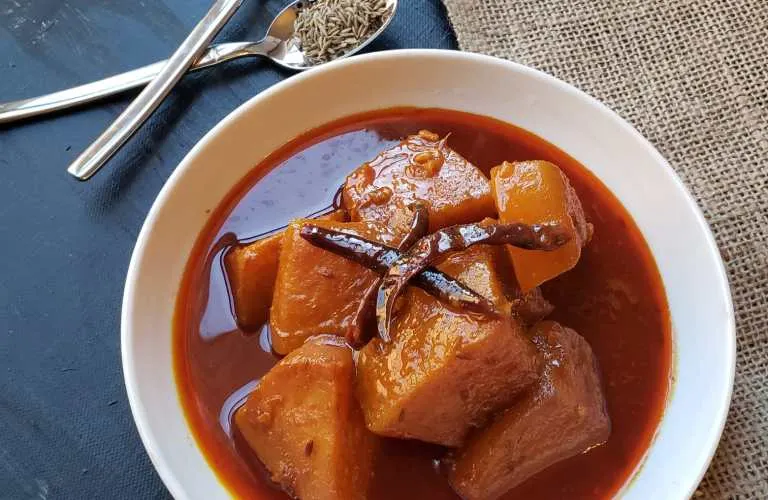
Ambal is a quintessential jewel of Dogra cuisine from the Jammu region, celebrated for its bold khatta-meetha (sour and sweet) flavor profile. Traditionally prepared as an indispensable part of the festive Dogra Dham—the traditional community feast served on leaf plates—this vibrant, rustic curry pairs tender cubes of sweet pumpkin with the sharp tang of tamarind or dried pomegranate seeds and the rich sweetness of jaggery.
What sets authentic Ambal apart is its masterful balance of contrasting elements. Unlike standard vegetable preparations cooked in neutral oils, Ambal relies on pungent, smoking-hot mustard oil tempered with dried fenugreek seeds, whole red chilies, and a pinch of asafoetida. The dish requires no onions, garlic, or tomatoes, allowing the deep caramel notes of melted jaggery and the sharp acidity of tamarind to coat the soft, melting chunks of pumpkin.
This homestyle heirloom recipe comes together in under thirty minutes using simple pantry essentials. It offers an earthy, deeply comforting taste of the Duggar heartland that pairs naturally with steamed rice and yellow lentils.
Recipe Information
- Prep Time: 10 minutes
- Soaking Time: 15 minutes (for tamarind)
- Cook Time: 20 minutes
- Total Time: 30 minutes
- Servings: 4
- Cuisine: Dogra / Jammu (North Indian)
- Course: Side Dish / Main Course (Dham Special)
- Difficulty: Easy
Ingredients
For Soaking the Tamarind
- 1 large lemon-sized ball dried tamarind (imli)
- 1/2 cup warm water
For the Pumpkin and Tempering
- 500g yellow or orange pumpkin (kaddu/peetha), peeled, seeds removed, and cut into 1-inch cubes
- 2.5 tablespoons mustard oil (kachi ghani)
- 1/2 teaspoon fenugreek seeds (methi dana)
- 1/2 teaspoon cumin seeds (jeera)
- 2 to 3 whole dried Kashmiri red chilies
- 1/4 teaspoon asafoetida (hing)
- 1/2 teaspoon turmeric powder (haldi)
- 1 teaspoon Kashmiri red chili powder
- 1 teaspoon coriander powder (dhania powder)
- 1 teaspoon salt (adjust to taste)
- 1/3 cup jaggery (gur), crushed or grated
- 3/4 cup water
How to Make Dogra Ambal
Step 1: Extract the tamarind pulp Place the dried tamarind in a small bowl with 1/2 cup of warm water. Allow it to soak for 15 minutes to soften. Mash the pulp thoroughly with your fingers to extract all the juices, then pass it through a fine-mesh sieve into a cup, pressing down with a spoon. Discard the seeds and tough fibers.
Step 2: Temper the mustard oil Heat the mustard oil in a heavy-bottomed kadai or pan over medium-high heat until it reaches a gentle smoking point. Turn off the flame for 1 minute to allow the oil to cool down slightly, preventing the spices from burning. Turn the heat back to medium-low and add the fenugreek seeds, cumin seeds, whole dried red chilies, and asafoetida (hing). Sauté for 20 to 30 seconds until the fenugreek seeds turn a fragrant golden brown. Do not let them turn dark brown or black, as they will turn bitter.
Step 3: Bloom the ground spices Lower the heat to low. Add the turmeric powder, Kashmiri red chili powder, and coriander powder directly into the warm oil. Stir quickly for 15 to 20 seconds to release the color and aroma of the spices without scorching them.
Step 4: Cook the pumpkin cubes Add the cubed pumpkin into the kadai and sprinkle with 1 teaspoon of salt. Toss well over medium heat for 3 to 4 minutes so the seasoned oil coats each piece evenly. Pour in 3/4 cup of water, bring it to a gentle simmer, then cover the pan with a tight-fitting lid. Reduce the heat to medium-low and cook undisturbed for 10 to 12 minutes, or until the pumpkin cubes are fork-tender and soft but still holding their shape.
Step 5: Add jaggery and tamarind reduction Remove the lid. Pour in the strained tamarind pulp and add the crushed jaggery. Stir gently until the jaggery completely melts into the warm sauce.
Step 6: Simmer to a glossy finish Let the curry simmer uncovered on low heat for 5 to 6 minutes. The jaggery and tamarind will reduce together with the natural starches of the pumpkin, transforming the thin broth into a glossy, amber-hued, semi-thick sauce that clings to the pumpkin. Use the back of your spoon to crush a few pumpkin cubes against the side of the pan to naturally thicken the gravy, leaving the rest intact. Taste and adjust the sweet-sour balance with extra jaggery or tamarind if desired. Turn off the heat and let the dish rest for 10 minutes before serving.
How to Serve
- Steaming hot white basmati rice paired with simple yellow moong or chana dal (the classic Dogra Dham trio: Rajma or Dal, Chawal, and Ambal)
- Jammu-style Rajma Chawal as a bright sweet-and-sour palate cleanser
- Fresh, hot phulkas or crispy parathas
- Fried puri with spiced potato curry
- Crisp roasted papad
Recipe Tips
- Select the right pumpkin: Choose ripe, deep-yellow or orange pumpkin rather than pale green varieties. Ripe pumpkin carries a natural mild sweetness and softens into a buttery texture during cooking.
- Do not burn the methi seeds: Fenugreek seeds (methi dana) provide the signature bitter-earthy backbone of Dogra gravies. Sauté them gently until light golden; overcooked or burnt seeds will turn the entire curry unpleasantly bitter.
- Authentic souring alternative (Anardana): In traditional rural households around the Shivalik hills, dried wild pomegranate seed paste (dharuni/anardana) is often used instead of tamarind, imparting an earthy, deep purple-red sourness.
- Balance is everything: The hallmark of Ambal is equal intensity between sour (khatta) and sweet (meetha). If your tamarind is exceptionally tart, increase the jaggery slightly; if your pumpkin is naturally very sweet, adjust with a dash more tamarind.
- Storage guidance: Ambal keeps exceptionally well in an airtight glass container in the refrigerator for up to 4 days. Because the tamarind and jaggery act as natural preservatives, the sweet-sour flavors meld together and taste even richer the next day. Reheat gently over low heat with a tablespoon of warm water.
Frequently Asked Questions
Can I make Ambal with sugar instead of jaggery? While you can substitute granulated sugar or brown sugar in an equal measure, jaggery (gur) is strongly recommended. Jaggery introduces caramel, earthy undertones and creates the signature thick, glossy sheen that plain white sugar cannot replicate.
Can other vegetables be used in place of pumpkin? Yes. In Dogra cuisine, Ambal is also made using colocasia roots (arbi), lotus stems (nadru), or small chunks of bottle gourd (lauki). The spice tempering and jaggery-tamarind base remain identical.
Why is my gravy too watery? If your pumpkin released excess liquid, simmer uncovered over medium heat for an extra 3 to 4 minutes and mash 3 or 4 pumpkin pieces thoroughly into the sauce using your ladle. This creates a natural, velvety body without adding cornstarch or flour.
Final Thoughts
Dogra Ambal is a masterclass in regional Indian minimalism, demonstrating how a handful of humble ingredients can create an unforgettable, palate-awakening dish. The interplay between sharp mustard oil, earthy spices, tangy tamarind, and melting jaggery elevates simple pumpkin into a celebratory feast. Prepare this authentic Jammu classic alongside rice and lentils to bring the festive spirit of a traditional Dogra Dham straight to your dining table.