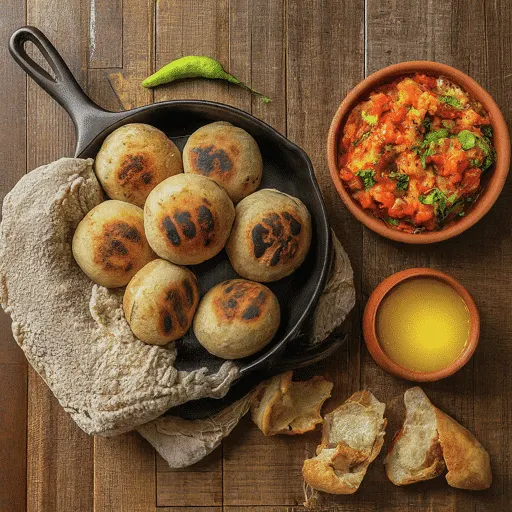
Litti Chokha is the culinary soul of Bihar, a rustic, wholesome meal with ancient roots in the Magadh region. Originally created as an agrarian staple and sustaining travelers across the fertile plains of eastern India, it features whole wheat dough balls stuffed with spiced roasted gram flour (sattu) and baked until crisp, then soaked in pure desi ghee. It is paired with chokha—a rustic mash of char-roasted eggplants, tomatoes, and potatoes infused with raw mustard oil.
The character of litti comes down to the stuffing. Sattu is packed with plant protein and mixed with crushed garlic, pungent ginger, fresh coriander, carom seeds (ajwain), and a spoonful of spicy, tangy mango or red chili pickle masala (achar ka masala). Roasting the stuffed balls slowly creates a firm, cracked exterior that drinks in melted ghee, revealing a fragrant, crumbly center.
While traditionally baked directly over glowing cow dung cakes or wood fires, litti can be made on a modern stovetop using an appe pan, a heavy tawa, or a standard oven. It is a hearty, deeply grounding meal that celebrates pure, unadorned rustic flavors.
Recipe Information
- Prep Time: 25 minutes
- Cook Time: 35 minutes
- Total Time: 1 hour
- Servings: 4 (makes about 10–12 littis)
- Cuisine: Bihari / Eastern Indian
- Course: Main Course
- Difficulty: Medium
Ingredients
For the Litti Dough
- 2 cups whole wheat flour (atta)
- 1/2 teaspoon carom seeds (ajwain)
- 1/2 teaspoon salt
- 2 tablespoons ghee or mustard oil (for shortening/moyen)
- Water (as needed for a firm dough, about 3/4 cup)
For the Sattu Stuffing
- 1.5 cups roasted chana sattu (roasted gram flour)
- 1 medium red onion (very finely chopped)
- 1.5 tablespoons garlic (finely minced)
- 1 tablespoon ginger (finely grated)
- 2 to 3 fresh green chilies (finely chopped)
- 1/4 cup fresh coriander leaves (finely chopped)
- 1 teaspoon carom seeds (ajwain)
- 1/2 teaspoon nigella seeds (kalonji / mangrela)
- 1.5 tablespoons raw cold-pressed mustard oil (kachi ghani)
- 1 tablespoon spicy mango pickle oil and masala (or stuffed red chili pickle masala)
- 1 tablespoon fresh lemon juice
- 1 teaspoon black salt or regular salt (adjust to taste)
- 2 to 3 tablespoons water (to moisten)
For the Baingan-Tamatar Chokha
- 1 large bharta eggplant (baingan, around 400g)
- 3 medium ripe tomatoes
- 2 medium potatoes (boiled and peeled)
- 4 cloves garlic (peeled, left whole for stuffing into the eggplant)
- 2 fresh green chilies (finely chopped)
- 1 small red onion (finely chopped)
- 2 tablespoons fresh coriander leaves (chopped)
- 1.5 tablespoons raw mustard oil
- 1 teaspoon salt (adjust to taste)
For Serving
- 1/2 cup pure desi ghee (melted, in a wide bowl)
How to Make Traditional Bihari Litti Chokha
Step 1: Knead the firm dough In a large mixing bowl, combine the whole wheat flour, ajwain, salt, and 2 tablespoons of ghee. Rub the flour between your palms until the fat is evenly dispersed. Gradually add water in small increments and knead into a tight, firm dough (noticeably stiffer than regular roti dough). Cover with a damp cloth and let it rest for 20 minutes.
Step 2: Prepare the sattu filling In a separate bowl, add the sattu, finely chopped onion, minced garlic, grated ginger, green chilies, coriander leaves, ajwain, kalonji, mustard oil, pickle masala, lemon juice, and salt. Mix thoroughly using your fingers. Sprinkle 2 to 3 tablespoons of water and rub the mixture until it turns damp and crumbly; it should hold its shape when pressed into a fist but break apart easily when dropped. Taste and adjust salt or lemon juice for a sharp, tangy bite.
Step 3: Stuff and shape the littis Pinch off a lemon-sized portion of the rested dough and roll it into a smooth ball. Flatten it between your palms and use your thumbs to press the center while rotating, creating a deep cup shape with edges thinner than the base. Spoon 2 generous tablespoons of the sattu filling into the cup. Gently press the filling down while bringing the edges of the dough together at the top. Pinch the seams tightly to seal, twist off any excess dough, and smooth it into a round ball. Repeat for the remaining dough and filling.
Step 4: Roast the vegetables for chokha Wash and wipe the large eggplant and tomatoes dry. Make 3 to 4 deep slits around the eggplant and slide the whole garlic cloves into the cuts. Rub a few drops of mustard oil over the skin of the eggplant and tomatoes. Place them directly over an open medium flame on your gas stove (or under an oven broiler). Turn occasionally with tongs until the skins are completely charred and blackened, and the flesh inside collapses and turns tender (about 10 to 12 minutes for the eggplant, 6 to 8 minutes for the tomatoes). Transfer to a plate to cool.
Step 5: Mash and season the chokha Peel off the blackened skins from the charred eggplant and tomatoes (a few tiny burnt specks add great rustic flavor). Cut off the eggplant stem and check the flesh. In a large bowl, combine the roasted eggplant, roasted garlic, charred tomatoes, and boiled potatoes. Mash roughly with a potato masher or clean hands. Add the chopped onion, green chilies, fresh coriander, raw mustard oil, and salt. Mix well. The texture should remain slightly chunky rather than pureed.
Step 6: Bake/roast the littis
- Oven Method: Preheat your oven to 400°F (200°C). Place the stuffed littis on a baking tray lined with parchment paper. Bake for 15 minutes, flip them over, and bake for another 15 minutes. Switch to broil for 2 to 3 minutes to develop charred brown patches and natural cracks across the surface.
- Appe Pan / Stovetop Method: Heat a cast-iron appe (paniyaram) pan or a heavy kadai over medium-low heat. Place the littis in the cavities, cover with a lid, and cook on low flame for 20 to 25 minutes, rotating every 4 to 5 minutes so all sides cook evenly and develop golden crusts with distinct cracks.
Step 7: Dip in ghee and assemble Remove the hot littis from the heat. Take each litti and press gently between your palms (using a clean kitchen towel) to crack the crust slightly open. Immediately submerge the cracked litti into the bowl of warm, melted desi ghee, letting it drink up the ghee for a few seconds. Lift out and place on the serving plate alongside a generous portion of baingan-tamatar chokha.
How to Serve
- Smoky Baingan-Tamatar-Aloo Chokha
- Hot Dhania-Pudina Chutney or raw Garlic-Chili Chutney
- A bowl of thin, spiced yellow arhar dal (toor dal)
- Raw sliced red onions, whole green chilies, and lemon wedges
- An extra bowl of warm desi ghee for dipping
Recipe Tips
- Knead a firm dough: Soft dough will flatten into discs during baking and absorb too much moisture from the filling, losing the traditional crisp, sturdy crust.
- Mustard oil is non-negotiable: Raw, pungent mustard oil gives both the sattu filling and the chokha their unmistakable Eastern Indian character. Do not heat the mustard oil used in the chokha—its raw bite is essential.
- Use pickle masala: Adding oil and spiced masala from a jar of traditional mango or red stuffed chili pickle (mirchi ka achar) provides the authentic tangy edge that balances the earthy sattu.
- Do not peel the roasted vegetables under running water: Washing charred eggplant and tomatoes under the tap washes away the smoky volatile oils. Peel the skins by hand on a dry plate.
- Cracking before the ghee dip: Always crack the hot litti slightly before dropping it into ghee. This allows the ghee to soak straight into the sattu core, turning the dry roasted filling moist and rich.
Frequently Asked Questions
Can I make litti without an oven or appe pan? Yes. You can roast littis on a heavy cast-iron tawa or jali (wire roasting rack) directly over low flame, turning them continuously with tongs until cooked through and charred. Alternatively, deep-fry the stuffed dough balls in hot ghee or oil over medium-low heat until golden-brown and cooked to the center.
What is the difference between sattu and besan? Besan is raw Bengal gram (chana dal) flour, which must be cooked thoroughly to eliminate bitterness. Sattu is made from roasted brown chickpeas, meaning it is already cooked, nutty, fragrant, and safe to eat straight from the package. Never use raw besan in place of sattu.
Can I store leftover littis? Yes. Littis keep well at room temperature for up to 2 days without spoiling because the dough is sturdy and the filling contains natural preservatives like mustard oil and pickle spices. Store them without soaking in ghee, and warm them on a hot tawa with a fresh brush of ghee before serving.
Final Thoughts
Bihari Litti Chokha represents Indian regional cooking at its most honest and unpretentious. The interplay between the crisp wheat shell, the spiced, nutty sattu center, and the rustic smokiness of fresh vegetable chokha drenched in golden desi ghee creates an unforgettable meal. Bake a batch over a slow flame to savor a true classic of the heartland.