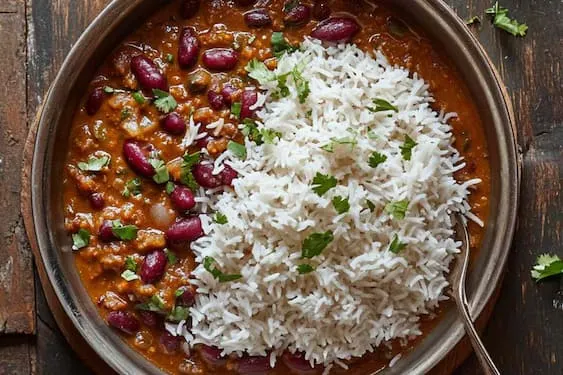
Rajma Madra is an esteemed traditional staple across the Jammu hills and neighbouring Himachal valleys, holding a cherished place in festive Dogra feasts and weddings. Unlike the tomato-and-onion gravies typical of Punjabi-style kidney beans, authentic Madra is slow-simmered in a rich, velvety curd base tempered with whole spices in pure desi ghee or pungent mustard oil.
The secret to an exceptional Madra lies in using compact, dark red beans—ideally sourced from the high-altitude fields of Bhaderwah or Kishtwar. These regional beans possess a naturally sweet, melt-in-the-mouth texture and a thin skin that drinks in the spiced dairy reduction. Whole aromatic spices like cloves, black cardamom, and cinnamon infuse the yogurt, while ground fennel and dry ginger provide earthy, soothing warmth without heavy chili heat.
This classic mountain preparation comes together smoothly on the stovetop once the beans are boiled. It delivers an intensely creamy, comforting vegetarian centerpiece that pairs effortlessly with steaming basmati rice.
Recipe Information
- Prep Time: 15 minutes
- Soaking Time: 8 hours
- Cook Time: 45 minutes
- Total Time: 9 hours
- Servings: 4
- Cuisine: Dogra / Pahadi (North Indian)
- Course: Main Course
- Difficulty: Easy
Ingredients
For Boiling the Rajma
- 1.5 cups Kashmiri/Bhaderwah red kidney beans (or small red rajma)
- 4.5 cups water
- 1 teaspoon salt
- 1 black cardamom (badi elaichi, cracked)
- 1-inch cinnamon stick
For the Madra Gravy Base
- 2.5 cups plain full-fat curd (dahi), fresh and whisked until smooth
- 1 tablespoon roasted gram flour (besan) or rice flour (to stabilize curd)
- 3 tablespoons pure desi ghee (or mustard oil)
- 1/2 teaspoon asafoetida (hing)
- 1 teaspoon cumin seeds (jeera)
- 3 green cardamoms (chhoti elaichi)
- 4 cloves (laung)
- 1 bay leaf (tej patta)
- 1/2 teaspoon turmeric powder (haldi)
- 1 tablespoon Kashmiri red chili powder
- 1.5 teaspoons fennel seed powder (saunf)
- 1 teaspoon dry ginger powder (saunth)
- 1 teaspoon coriander powder (dhania)
- 1/2 teaspoon garam masala
- 1 teaspoon salt (adjust to taste)
- 1 cup reserved rajma stock
For the Traditional Finish (Optional)
- 1/4 cup golden raisins (kishmish)
- 1/4 cup dry coconut slices (copra/sukha nariyal, thinly sliced and lightly fried)
How to Make Jammu-Style Rajma Madra
Step 1: Soak and pressure-cook the rajma Rinse the kidney beans thoroughly under cold running water. Soak them in generous water for at least 8 hours or overnight. Drain the soaking water and transfer the beans to a pressure cooker. Add 4.5 cups of fresh water, 1 teaspoon of salt, the cracked black cardamom, and the cinnamon stick. Seal the lid and pressure cook on medium heat for 5 to 6 whistles (or 25 minutes on High in an electric pressure cooker with natural release). The beans should become completely tender, yielding easily when pressed between two fingers, while remaining whole and intact. Drain, reserving 1 cup of the rich cooking liquid.
Step 2: Whisk and prep the yogurt In a mixing bowl, combine the full-fat curd with the roasted besan. Whisk vigorously with a hand whisk for 2 minutes until completely lump-free, glossy, and smooth. Incorporating a small amount of besan binds the proteins and prevents the curd from curdling or splitting over heat.
Step 3: Temper the whole spices Heat the desi ghee in a heavy-bottomed kadai or deep pan over medium-low heat. Add the cumin seeds and asafoetida (hing). Let the cumin crackle for 15 seconds. Add the bay leaf, cloves, and green cardamoms, sautéing gently for 20 to 30 seconds until the whole spices release their warm, sweet aroma into the fat.
Step 4: Cook and stabilize the yogurt base Turn the heat to the lowest setting. Gradually pour in the whisked curd in a steady, continuous stream. Immediately begin stirring in one constant direction using a wooden spatula or whisk. Stir without stopping for 5 to 7 minutes until the curd begins to bubble gently and reaches a simmer. Once it boils steadily, the curd is fully stabilized and will not split.
Step 5: Bloom the ground spices Add the turmeric powder, Kashmiri red chili powder, fennel seed powder (saunf), dry ginger powder (saunth), and coriander powder directly into the simmering yogurt. Stir thoroughly for 2 minutes over low heat as the spices bloom and tint the gravy into a warm, sunset-orange hue.
Step 6: Simmer with the cooked rajma Add the boiled kidney beans and 1 cup of the reserved cooking broth to the pan. Season with 1 teaspoon of salt. Stir gently to integrate the beans with the spiced gravy. Bring the curry to a boil, then reduce the heat to low. Cover the pan with a lid and simmer gently for 15 to 20 minutes, stirring occasionally. The beans will absorb the aromatic flavors, and the gravy will thicken naturally to a luscious, coating consistency.
Step 7: Finish and rest Remove the lid. Stir in the garam masala along with the golden raisins and lightly fried dry coconut slices. Let the curry simmer uncovered on low for another 2 to 3 minutes until ghee separates and glistens across the surface. Turn off the flame, replace the lid, and let the Madra rest undisturbed for 10 minutes before serving.
How to Serve
- Steaming hot basmati rice or local short-grain Pahadi rice
- Dogra Ambal (sweet and sour pumpkin curry) on the side for classic Dham contrast
- Fresh radish and walnut chutney (doon muj chetin)
- Warm puris or whole wheat rotis smeared with ghee
- Crisp roasted papad and sliced raw onions with lemon wedges
Recipe Tips
- Source Bhaderwah or small Kashmiri rajma: Small red kidney beans have thinner coats and a buttery interior that soaks up the spiced curd deeply. Standard large kidney beans have thicker skins and require longer simmering to soften properly.
- Keep the yogurt at room temperature: Cold yogurt straight out of the refrigerator tends to break when meeting hot fat. Always bring the curd to room temperature before adding it to the kadai.
- Do not stop stirring initially: Continuous stirring in a uniform direction during the first few minutes of heating curd ensures an emulsion that yields a silky, restaurant-quality sauce.
- Do not discard the boiling broth: The dark water in which the beans are cooked is packed with natural starches and rich bean flavor. Using it to thin the gravy lends authentic depth that plain water cannot match.
- Resting enhances richness: Like all slow-cooked bean dishes, Madra develops deeper, more harmonious flavors as it cools and sits. Store in an airtight container in the refrigerator for up to 3 days, loosening with a splash of warm water when reheating.
Frequently Asked Questions
Can I make Madra with other legumes or vegetables? Yes. In Dogra and Himachali kitchens, Madra is frequently prepared using white chickpeas (Kabuli Chana Madra), black chickpeas (Kala Chana Madra), or even chunks of fried paneer and lotus root (Nadru Madra) using the exact same spiced yogurt technique.
Can I substitute mustard oil for ghee? Yes. While desi ghee is traditional for its rich, buttery fragrance in festive cooking, cold-pressed mustard oil creates a rustic, pungent mountain variation. If using mustard oil, heat it until it smokes lightly, then cool slightly before adding the whole spices.
Why is there no onion or garlic in this recipe? Authentic Pahadi Madra is traditionally prepared by temple and community cooks (boti) for festive Dhams, where sattvic culinary traditions strictly omit onion, garlic, and tomatoes. The deep savory base relies entirely on asafoetida, dry ginger, fennel, and slow-simmered whole spices.
Final Thoughts
Jammu-Style Rajma Madra proves how ancient regional techniques transform simple mountain staples into a rich, celebratory meal. The marriage of buttery red kidney beans, fragrant whole spices, and slow-reduced spiced curd produces a soothing, multi-layered profile that stands apart from conventional curries. Serve it hot alongside fluffy steamed rice to bring the heritage of the Shivalik foothills right to your table.