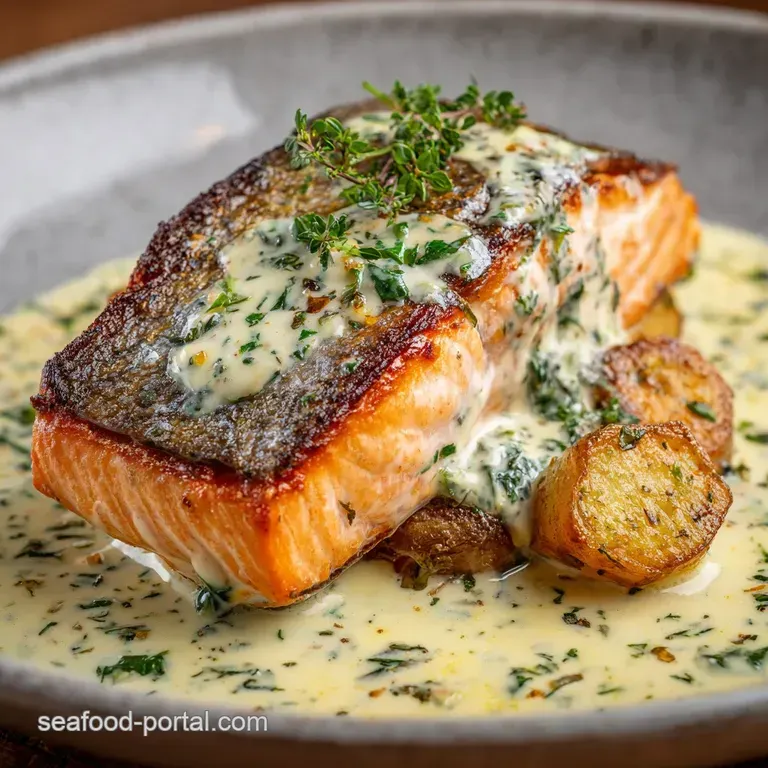
Pan-seared salmon is one of the most versatile, quick-cooking seafood dishes you can make at home. A well-executed fillet offers a distinct textural contrast: deeply crisp, golden skin on the exterior and moist, tender fish on the inside.
While cooking fish can sometimes feel intimidating to beginners, this pan-searing method requires only a few minutes and minimal equipment. The secret lies in thoroughly drying the skin and cooking it undisturbed in a hot, heavy skillet. Finishing the fillets with a quick basting of garlic, butter, and fresh herbs elevates simple fish into a centerpiece worthy of an elegant dinner.
Whether you need a reliable 15-minute weeknight dinner or a light, flavorful meal for entertaining, pan-searing salmon guarantees consistent, restaurant-quality results every time.
Recipe Information
- Prep Time: 5 minutes
- Cook Time: 8 minutes
- Total Time: 13 minutes
- Servings: 2
- Cuisine: American / Continental
- Course: Main Course
- Difficulty: Easy
Ingredients
For the Salmon
- 2 center-cut salmon fillets (approximately 170g / 6 oz each, skin-on)
- 1 tablespoon olive oil or avocado oil
- 1/2 teaspoon kosher salt
- 1/4 teaspoon freshly cracked black pepper
For the Garlic Herb Butter
- 2 tablespoons unsalted butter
- 2 cloves garlic (smashed and peeled)
- 2 sprigs fresh thyme or rosemary
- 1 tablespoon fresh lemon juice
For the Garnish
- 1 tablespoon fresh parsley (finely chopped)
- Lemon wedges for serving
How to Make Crispy Pan-Seared Salmon
Step 1: Dry the fillets Remove the salmon fillets from the refrigerator about 10 minutes before cooking. Use paper towels to pat the salmon thoroughly dry on all sides, paying special attention to the skin. Moisture is the primary obstacle to achieving crisp skin, so the surface must be completely dry. Season both sides evenly with kosher salt and black pepper just before cooking.
Step 2: Heat the skillet Place a heavy-bottomed stainless steel or cast-iron skillet over medium-high heat. Add the olive oil and allow the pan to heat until the oil shimmers across the surface and is just below its smoking point.
Step 3: Sear the skin side Carefully lay the salmon fillets into the hot oil skin-side down, laying them away from you to prevent hot oil splatters. Immediately press gently on each fillet with a flat spatula for 10 to 15 seconds. This counteracts the natural tendency of the skin to curl, ensuring flat, continuous contact with the pan.
Step 4: Cook undisturbed Lower the heat slightly to medium. Allow the salmon to cook skin-side down, undisturbed, for 5 to 6 minutes. You will observe the flesh turning opaque as it cooks upward from the bottom. The fish is ready to flip when approximately two-thirds of the fillet has lightened in color and the skin releases naturally from the pan without tearing.
Step 5: Flip and baste Gently flip the fillets flesh-side down using a thin fish spatula. Immediately drop the unsalted butter, smashed garlic cloves, and fresh thyme sprigs into the open space in the skillet. As the butter melts and foams, tilt the pan slightly toward you and spoon the hot, herb-infused butter over the top of the crispy skin. Baste continuously for 1 to 2 minutes until the flesh is cooked to medium (opaque on the sides, slightly translucent in the center, or an internal temperature of 125°F to 130°F / 52°C to 54°C).
Step 6: Finish and rest Drizzle the fresh lemon juice into the pan right over the fish. Transfer the salmon fillets to warm serving plates with the skin-side facing up to preserve its crisp texture. Let the fish rest for 2 minutes before serving.
How to Serve
- Garlic mashed potatoes or buttered baby potatoes
- Roasted asparagus with lemon zest
- Steamed jasmine rice or seasoned quinoa
- Crisp green salad with a light vinaigrette
- Sautéed garlic spinach
Recipe Tips
- Select skin-on fillets: The skin acts as a protective barrier against direct heat, preventing the delicate salmon flesh from overcooking and drying out while providing substantial flavor.
- Do not move the fish early: If you attempt to flip the salmon and feel resistance, stop. The skin naturally releases itself from the metal once it has developed a proper, fully crisped crust.
- Prevent gray albumin buildup: The white substance that sometimes surfaces on cooked salmon is albumin, a coagulated protein. Cooking the fish gently after the initial sear and pulling it off the heat before it overcooks keeps the albumin inside the fillet.
- Rest skin-side up: Never rest or plate pan-seared salmon skin-side down onto a wet sauce, as the trapped steam will immediately turn the crispy skin soft.
- Storage guidance: Pan-seared salmon is best enjoyed immediately. If storing leftovers, keep them in an airtight container in the refrigerator for up to 2 days. Reheat slowly in a dry pan over low heat rather than using a microwave.
Frequently Asked Questions
Can I make this recipe without the skin? Yes. Use the same technique, but sear the first side for only 3 to 4 minutes until a golden crust forms, then flip, add the butter and aromatics, and cook for another 2 to 3 minutes until done.
How do I know when the salmon is fully cooked? A meat thermometer inserted into the thickest part of the fillet should register between 125°F and 130°F (52°C to 54°C) for medium doneness, which is tender and juicy. The flesh should flake easily along the natural grain when gently pressed with a fork.
Can I use frozen salmon fillets? Yes, but the fillets must be completely thawed in the refrigerator overnight before cooking. Do not cook partially frozen fillets, as the excess water will cause the fish to boil in its own juices rather than sear.
Final Thoughts
Pan-seared salmon proves that basic kitchen techniques and fresh ingredients can yield an exceptional, satisfying meal in under fifteen minutes. By keeping the skin dry and controlling the heat of your pan, you get a dependable sear every single time. It is a fundamental technique that will quickly become an indispensable part of your cooking repertoire.