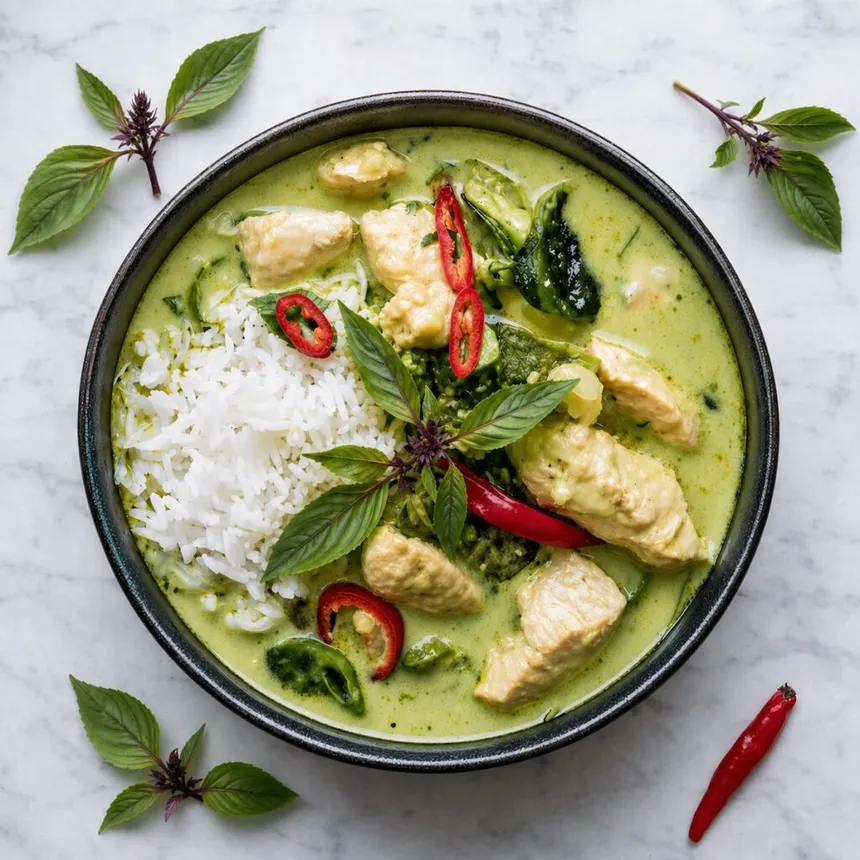
Thai Green Curry, known locally as Gaeng Keow Wan, is one of the most recognized dishes in Thai cuisine. Originating in central Thailand, the curry pairs tender chicken with crisp vegetables in a rich, coconut-milk base infused with green chilies, lemongrass, and aromatic herbs. The word “wan” means sweet, referring to the pleasant pale green color of the sauce rather than a sugary flavor profile.
Making Thai green curry at home is fast once your ingredients are prepped. While traditional pastes are pounded by hand in a stone mortar, using a high-quality store-bought paste or blending fresh aromatics allows home cooks to recreate the complex balance of salty, savory, spicy, and herbaceous notes in under half an hour.
The dish is ideal for a vibrant weeknight dinner or an informal gathering. The fragrance of torn kaffir lime leaves and fresh Thai basil simmering in coconut milk creates an inviting meal that pairs naturally with steamed rice.
Recipe Information
- Prep Time: 15 minutes
- Cook Time: 15 minutes
- Total Time: 30 minutes
- Servings: 4
- Cuisine: Thai
- Course: Main Course
- Difficulty: Easy
Ingredients
For the Curry Base
- 2 tablespoons coconut oil or neutral cooking oil
- 3 tablespoons Thai green curry paste
- 1 can (400 ml) full-fat coconut milk (divided into cream and liquid)
- 1/2 cup low-sodium chicken broth or water
For the Chicken and Vegetables
- 450g boneless, skinless chicken thighs (sliced into bite-sized strips)
- 1 cup Thai eggplants (quartered) or 1 medium zucchini (sliced into half-moons)
- 1/2 cup bamboo shoots (drained and rinsed)
- 1 small red bell pepper (thinly sliced)
For Seasoning and Aromatics
- 1 tablespoon fish sauce
- 1 teaspoon palm sugar or light brown sugar
- 4 fresh kaffir lime leaves (stems removed, torn in half)
- 1 cup fresh Thai sweet basil leaves
How to Make Authentic Thai Green Curry
Step 1: Crack the coconut cream Open the can of full-fat coconut milk without shaking it. Spoon out the thick layer of coconut cream that sits at the top (approximately 1/2 cup) and place it into a wide pot or wok set over medium heat along with the cooking oil. Stir continuously for 3 to 4 minutes until the cream sizzles, reduces, and begins to separate into clear oil droplets. This step is traditional and brings out the aromatics.
Step 2: Fry the curry paste Add the green curry paste directly into the bubbling coconut cream. Lower the heat slightly to medium-low. Use a wooden spoon to break down the paste, stirring constantly for 2 to 3 minutes until it releases a strong, fragrant aroma and oil beads form along the edges.
Step 3: Sear the chicken Add the sliced chicken thighs to the pot. Stir well to coat each piece in the curry paste mixture. Cook for 3 to 4 minutes, turning the meat occasionally, until the chicken turns opaque on the outside. It does not need to be completely cooked through at this stage.
Step 4: Simmer with remaining liquids and vegetables Pour in the remaining thin coconut milk from the can along with the chicken broth. Add the torn kaffir lime leaves, quartered Thai eggplants, bamboo shoots, and sliced red bell pepper. Bring the liquid to a gentle boil, then lower the heat to maintain a steady simmer. Cook uncovered for 6 to 8 minutes until the chicken is cooked through and the vegetables are tender-crisp.
Step 5: Season the sauce Stir in the fish sauce and palm sugar. Allow the sauce to simmer for another minute to dissolve the sugar completely. Taste the curry; it should be rich, savory, slightly spicy, and balanced with mild sweetness and salt from the fish sauce.
Step 6: Finish with Thai basil Turn off the heat entirely. Add the fresh Thai basil leaves and gently press them down into the hot curry until they wilt. The residual heat will extract their essential oils without darkening the leaves. Serve immediately.
How to Serve
- Steamed jasmine rice
- Rice noodles (Khanom Jeen)
- Fresh cucumber slices
- Roti flatbread
- Thai-style crispy fried eggs
Recipe Tips
- Use full-fat canned coconut milk: Avoid light or carton coconut milk, as they are diluted with water and thickeners. Full-fat canned coconut milk provides the required richness and naturally thick sauce.
- Crack the cream: Sautéing the curry paste in reduced coconut cream instead of plain water or plain oil unlocks fat-soluble flavor compounds in the chilies and herbs.
- Keep vegetables crisp: Do not overcook the eggplants or peppers. Thai curries are characterized by vegetables that retain structural bite rather than soft, stewed textures.
- Handle lime leaves properly: Tear the kaffir lime leaves down the center spine to release their citrus aroma before dropping them into the broth.
- Substitute Thai basil with care: If Thai basil is unavailable, Italian sweet basil works in a pinch, though it lacks the slight anise and licorice notes typical of the dish.
- Store and reheat: Keep leftovers in an airtight glass container in the refrigerator for up to 3 days. Reheat gently over medium-low heat on the stovetop to prevent the coconut fats from separating.
Frequently Asked Questions
How do I adjust the spice level? Green curry is traditionally the spiciest of the main Thai curries. To reduce the heat, cut the green curry paste down to 2 tablespoons and balance with an extra splash of coconut milk. To increase the heat, slice 2 to 3 fresh bird’s eye chilies and simmer them with the vegetables.
Can I make this vegetarian or vegan? Yes. Replace the chicken with cubed extra-firm tofu or fried tofu puffs. Substitute the fish sauce with an equal amount of soy sauce or vegan stir-fry mushroom sauce. Ensure your green curry paste does not contain shrimp paste.
What if I cannot find Thai eggplant? Zucchini, small globe eggplants, or snap peas are practical substitutes. Cut zucchini into thick half-moons and add it during the last 4 minutes of cooking so it does not turn mushy.
Final Thoughts
Making authentic Thai green curry at home delivers bright, herbaceous flavor and rich texture that matches restaurant offerings. The combination of simmered aromatics, rich coconut milk, and fresh herbs creates an adaptable, satisfying meal. Keep quality canned coconut milk and curry paste in your pantry for a complete, restaurant-style dinner ready in 30 minutes.